Severe Playground Injury Ignites Debate: Was Disciplinary Action Justified?
Parental accounts reveal a clash between perceived fairness and documented evidence following a significant playground mishap involving a child with attention deficit hyperactivity disorder.
Allegations surface regarding the appropriateness of consequences imposed on the young student involved, prompting questions about consistency in handling such situations across educational settings.
December 11, 2026
Article last updated by Alisha Shrestha on December 10, 2026
Experts weigh in on an incident at an elementary institution that underscores complexities inherent in addressing impulsive actions among children exhibiting neurodevelopmental differences.
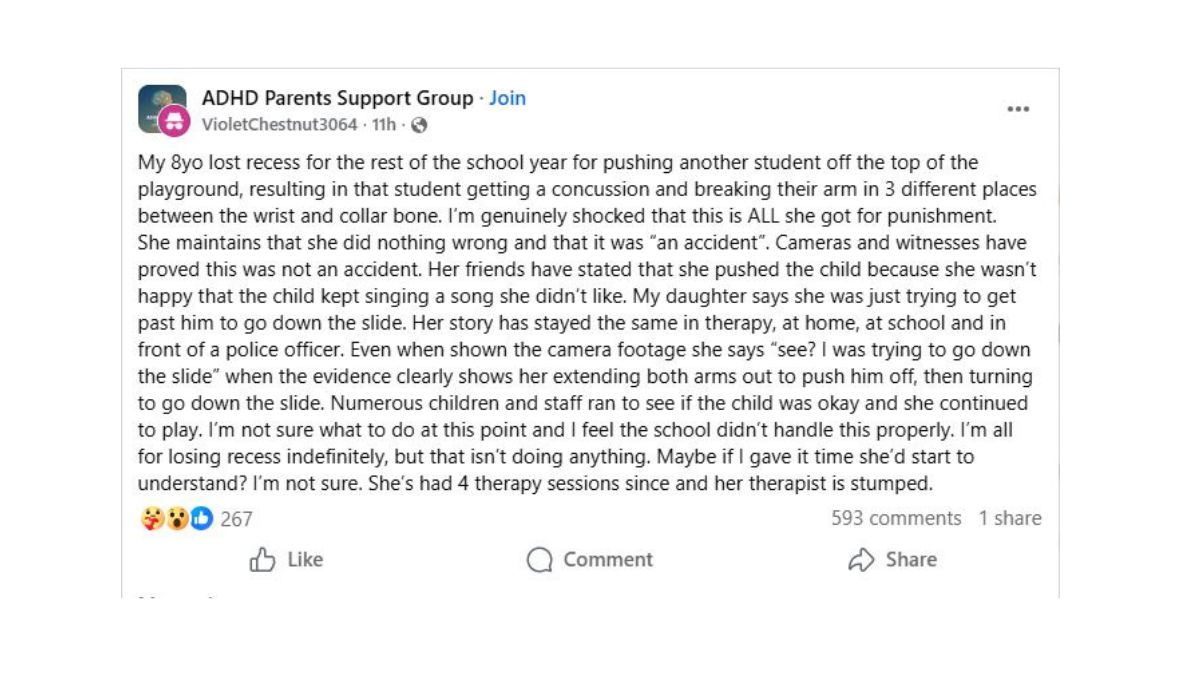
According to a social media post from VioletChestnut3064 within an online ADHD support community, her eight-year-old daughter faced exclusion from recess following an event where another student sustained serious injuries.
The aftermath included a concussion and multiple fractures for the affected child, challenging narratives about accidental harm versus deliberate action.
VioletChestnut3064 expresses surprise at what she views as insufficient repercussions, maintaining her daughter's claim of unintentionality despite corroborating evidence.
Supporting testimonies from peers suggest the interaction stemmed from musical preferences rather than malicious intent, complicating assessments of culpability.
Statements from caregivers articulate dissatisfaction with current punitive frameworks, advocating instead for educational interventions tailored to developmental realities.
Community dialogue explores nuances between impulsive behavior and intentional wrongdoing, emphasizing contextual factors influencing child conduct.
Specialists propose integrating empathy-building practices alongside structured guidance to address underlying issues effectively.
Legal considerations emerge as potential pathways for resolution, balancing accountability with developmental awareness.
Environmental aspects such as equipment design receive scrutiny regarding safety standards necessary to prevent severe outcomes.
Personal anecdotes highlight successful transitions from impulsive actions to responsible decision-making through supportive approaches.
Advocates stress the importance of recognizing neurodiversity when evaluating behavioral patterns and implementing corrective measures.
Concluding reflections reinforce the value of compassionate yet firm guidance in fostering constructive growth trajectories.
Strategic recommendations prioritize holistic development over simplistic labels, aiming to cultivate resilience and self-regulation skills.
Related articles appear under separate headings dated May 14, May 13, and May 12, 2026.
Comments section invites public discourse with prompts for contributions.
Additional content includes obituaries for Howard Paul Sr., Andrew O'Donnell, and Judy Evans Milby, providing biographical context for respective individuals.
